
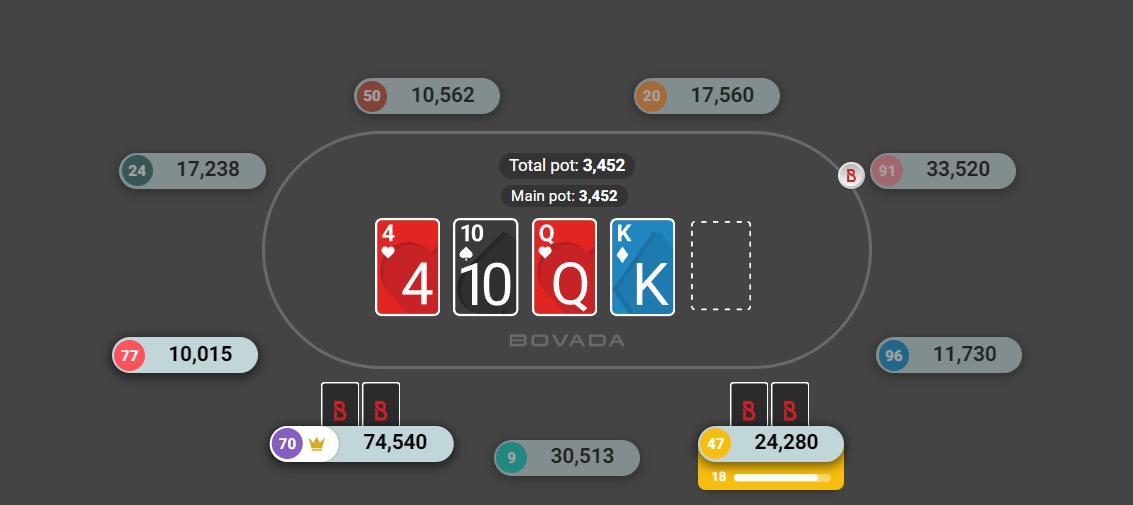
How to Play Poker
No-limit Texas Hold’em is a widely favored variant of poker, renowned for its strategic depth and thrilling dynamics. In this game, each player is dealt two private cards, known as hole cards, which they combine with five community cards to form the best possible five-card hand.
The “no-limit” aspect refers to the lack of restrictions on the maximum bet a player can make, allowing for high-stakes action and dramatic all-in moments that keep players on the edge of their seats. This variant is not only a staple in casinos but also a popular choice for home games, offering both seasoned professionals and casual players an exciting platform to test their skills and bluffing prowess. Its widespread appeal is further amplified by its prominent presence in prestigious tournaments such as the World Series of Poker, where players from around the globe compete for glory and substantial cash prizes. Here’s a detailed explanation of how to play:
Objective:
In the game of poker, the primary objective is to accumulate as many chips as possible by strategically outmaneuvering your opponents. Victory can be achieved in two main ways: by having the best hand at the showdown or by compelling your opponents to fold before the showdown occurs. Having the best hand means that you have a combination of cards that ranks higher than those of your opponents when all remaining players reveal their hands.
Alternatively, you can win by applying psychological pressure and strategic betting to make your opponents believe that continuing to play is not in their best interest, thus forcing them to fold. This dual approach to winning requires a keen understanding of probability, psychology, and the ability to read your opponents’ behavior, making poker as much a game of skill and strategy as it is of chance.
Setup:
– Players: Typically 2-10 players.
– Deck: A standard 52-card deck.
– Chips: Players are given a set amount of chips to start.
Basic Structure:
1. Blinds: Two players post forced bets called the “small blind” and the “big blind” to initiate the betting. The player to the left of the dealer posts the small blind, and the player to their left posts the big blind.
2. Hole Cards: Each player is dealt two private cards (hole cards) face down.
3. Betting Rounds: There are four betting rounds: Pre-flop, Flop, Turn, and River.
Betting Rounds Explained:
1. Pre-flop:
– After receiving their hole cards, players decide to call, raise, or fold, starting with the player to the left of the big blind.
2. Flop:
– Three community cards are dealt face up on the table.
– A new round of betting begins, starting with the first active player to the left of the dealer.
3. Turn:
– A fourth community card is dealt face up.
– Another round of betting occurs.
4. River:
– A fifth and final community card is dealt face up.
– The final round of betting takes place.
Showdown:
Once the final betting round concludes and two or more players are still in the game, a showdown occurs where each player reveals their hole cards. The objective is to form the best possible five-card hand by utilizing any combination of their two hole cards and the five community cards laid out on the table. The player who assembles the highest-ranking hand according to poker hand rankings wins the entire pot.
However, if two or more players have hands of equal value, indicating a tie, the pot is evenly divided among those players. This conclusion adds a layer of strategy and excitement, as players must skillfully assess their hand’s potential against the community cards and anticipate the strength of their opponents’ hands.
Hand Rankings (from highest to lowest)
1. Royal Flush: A, K, Q, J, 10, all of the same suit.
2. Straight Flush: Five consecutive cards of the same suit.
3. Four of a Kind: Four cards of the same rank.
4. Full House: Three cards of one rank and two of another.
5. Flush: Five cards of the same suit.
6. Straight: Five consecutive cards of different suits.
7. Three of a Kind: Three cards of the same rank.
8. Two Pair: Two cards of one rank and two cards of another rank.
9. One Pair: Two cards of the same rank.
10. High Card: If no one has any of the above, the highest card wins.
No-Limit Betting:
Players have the exciting option to bet any amount of their chips at any given moment, providing them with a dynamic range of strategic possibilities. This flexibility allows players to wager small amounts to test the waters or make a bold statement by going “all-in,” putting all their chips on the line in a single, high-stakes bet.
The ability to go all-in adds a thrilling layer of psychological warfare to the game, as it can be used to pressure opponents into making difficult decisions, potentially forcing them to fold stronger hands or enticing them into a dramatic showdown. This element of gameplay not only keeps the players on their toes but also ensures that each hand can shift the balance of power at the table, making every decision crucial and every game uniquely unpredictable.

Strategy tips: In no-limit Texas Hold’em, adopting a tight but aggressive strategy is key to maximizing your success at the poker table. This approach emphasizes the importance of playing strong hands and betting them assertively to build pots and apply pressure on opponents. Position is vital, as acting later in the betting order offers a strategic edge, enabling you to make more informed decisions based on your opponents’ actions.
Although bluffing can be a powerful tool, it should be employed carefully to prevent predictability and unnecessary risk. Observing your opponents closely is essential for identifying betting patterns and gauging hand strength, which can inform your strategy and enhance your decision-making process. By mastering these principles, you’ll be well-equipped to navigate the complexities of no-limit Texas Hold’em and increase your chances of success.

